






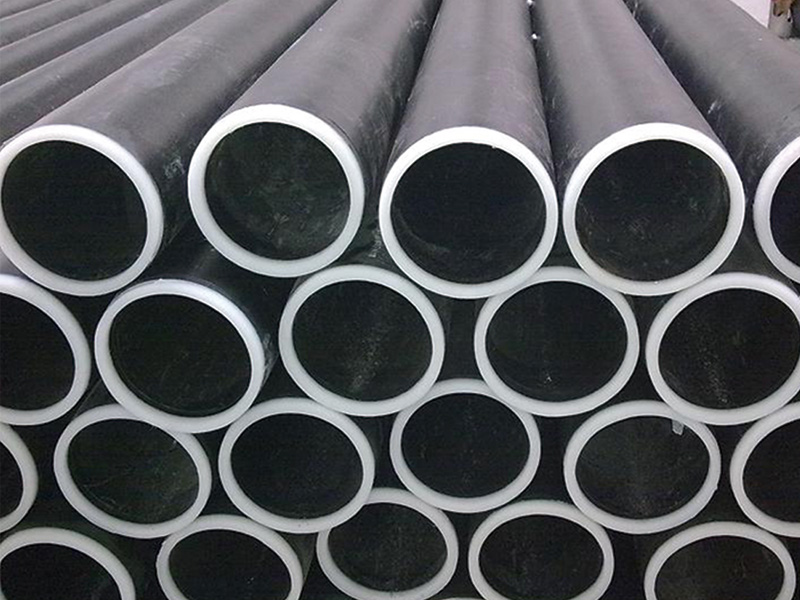
PE steel wire skeleton polyethylene composite pipe
Product Introduction:
PE steel wire skeleton polyethylene composite pipe (commonly known as PSP pipe, SRTP pipe) is a steel plastic composite pressure pipe. It is made of HDPE as the matrix, and copper plated/galvanized steel wire is spiral wound left and right to form a mesh skeleton as the reinforcement. It is formed by three-layer co extrusion and modified bonding resin composite molding, which combines the corrosion resistance of plastic with the high strength of metal. It is widely used in pressure transportation scenarios such as water supply and chemical industry
Performance Characteristics
1. Light weight and high strength: Medium to high density polyethylene has a density of 940-960kg/m3, which is only 1/8 of steel and 70% polyvinyl chloride. Under normal usage conditions, it can withstand a pressure of 1.0Mpa or even higher.
2. Long service life and high flow rate: Traditional steel pipes have a service life of about 15 years, while polyethylene pipes have a service life of over 50 years, with a roughness of only 1/6 of steel pipes. Under the same inner diameter conditions, they have a greater water carrying capacity than traditional steel pipes, and this becomes more pronounced with increasing use time.
3. Convenient transportation and installation, fast and reliable, and low overall cost: Compared with steel pipes, polyethylene pipes are lightweight, flexible, and conducive to transportation and installation. The pipes are reliably connected using hot melt and electric melt methods, greatly reducing the labor intensity and construction costs of workers. Taking into account factors such as material costs, mechanical and labor costs for installation and construction, and pipe flow rate, the total cost is low compared to steel pipes.
4. Compared with steel pipes, polyethylene pipes do not scale, and there is no secondary pollution caused by scaling and corrosion in steel pipes. Compared with polyvinyl chloride, this product does not add any additives, making it safer and more hygienic to use. The waste generated during production and installation can be recycled and reused after cleaning, without polluting the environment.
Product advantages: